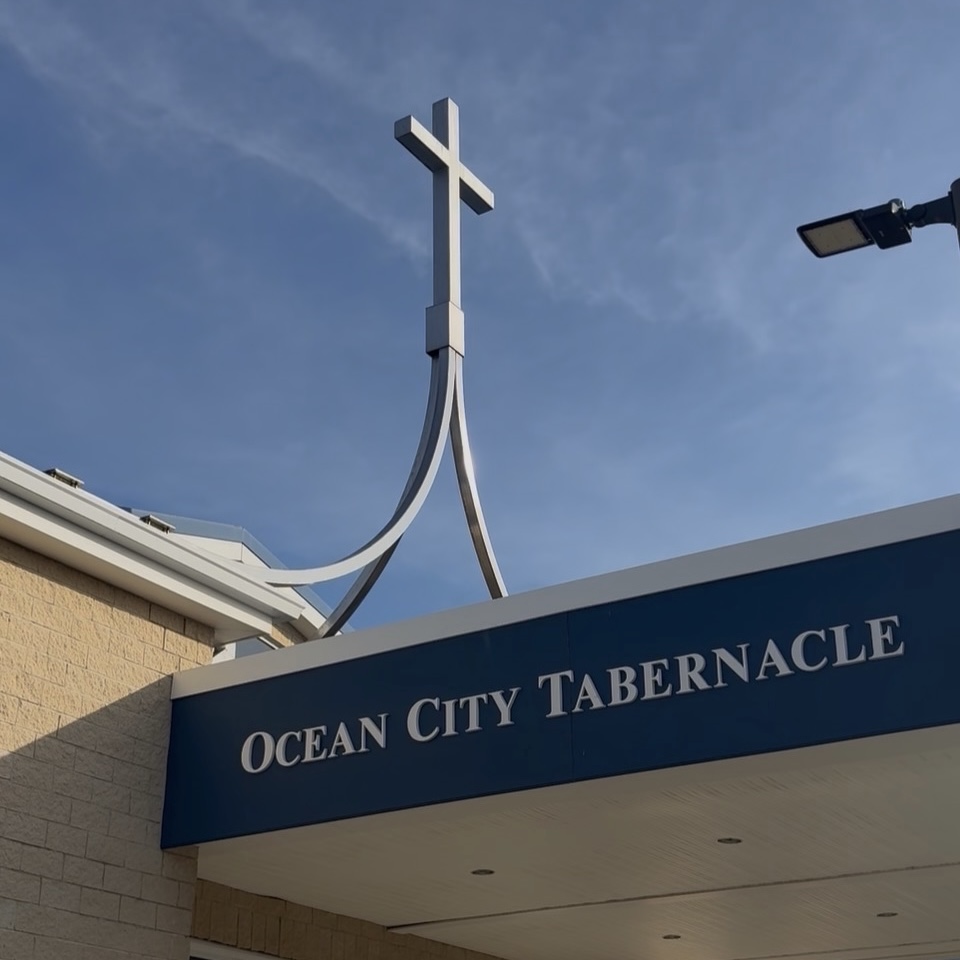
When life changes in a single moment, where do you turn? At Ocean City Tabernacle, Dr. David Ashcraft drew from King Hezekiah’s crisis in 2 Kings 19—and from his own recent cancer diagnosis—to offer a deeply personal message about prayer, surrender, and trusting God with the outcome.
Speaker: Dr. David Ashcraft
Message: “How to Respond to Desperate Situations”
Date: Sunday, June 28, 2026
Venue: Ocean City Tabernacle, 550 Wesley Ave., Ocean City, NJ
A Message for Life’s Defining Moments
Some Sunday messages arrive polished and encouraging. Others meet people in the raw places of life. Dr. David Ashcraft’s June 28 message did both.
Using King Hezekiah’s response to an impossible threat in 2 Kings 19, Dr. Ashcraft showed what it looks like to bring desperate circumstances honestly before God. The teaching became especially powerful when he shared his own “moment”: a recent breast cancer diagnosis, a drive through Lancaster County, and a prayer of complete surrender.
“Every once in a while, every one of us will have a moment—a moment that has the potential to change everything in our lives.”
Who Is Dr. David Ashcraft?
Dr. David Ashcraft is President and CEO of the Global Leadership Network, the organization behind the Global Leadership Summit. Before entering that role, he spent 32 years as founding and lead pastor of LCBC—Lives Changed by Christ—in Lancaster, Pennsylvania. During his tenure, the church grew from a small congregation into a multisite ministry serving thousands of people.
He continues to serve as Pastor Emeritus at LCBC and founded The Advantage, a ministry supporting pastors across Pennsylvania. He is also the author of What Was I Thinking? and has been married to his wife, Ruth, for more than 40 years.
Ocean City Tabernacle is familiar ground for Dr. Ashcraft. He has vacationed in Ocean City for 35 years and worshiped at the Tabernacle throughout those summers. On this Sunday, he stepped from the pew to the pulpit carrying more than leadership experience—he carried a story he had only recently begun to share publicly.
Hezekiah’s Impossible Situation
King Hezekiah received a letter demanding immediate, unconditional surrender. The Assyrian king threatened to destroy Judah and had the military power to carry out that threat. It was the kind of news that stops time—the kind of moment a person remembers in vivid detail for the rest of life.
Many people know that feeling. A diagnosis, a phone call, a broken relationship, a financial crisis, or an unexpected loss can divide life into “before” and “after.” Dr. Ashcraft’s question was practical: What do we do when that moment comes?
Hezekiah Took the Letter to God
Hezekiah did not run first to his generals or advisers. He went to the temple, spread the threatening letter before the Lord, and prayed. His action offers a simple pattern for desperate situations: bring the actual problem to God. Name it. Open it up. Stop pretending it is smaller or easier than it is.
“Hezekiah gets this threatening letter and he runs—not to his generals, not to his advisers—he runs to God and he spreads that letter out before the Lord.”
He Remembered Who God Is
Before asking for rescue, Hezekiah reminded himself who was listening: the God enthroned above the cherubim, the God over every kingdom, and the Creator of heaven and earth. This was not flattery. It was perspective. The threat was real, but it was not greater than God.
Only then did Hezekiah make his request directly: “Rescue us.” His prayer was honest, specific, and rooted in God’s character.
Dr. Ashcraft’s Own Moment
The message shifted when Dr. Ashcraft told the congregation about waking during the night with a burning sensation in his chest and discovering a lump. On the Monday before Thanksgiving, he underwent a mammogram and ultrasound. During the appointment, the radiologist used the words “your cancer.”
He asked her to repeat herself. She explained that she was fairly confident he had cancer and asked him to return the next day for a biopsy. When he tried to frame it as an interruption to his schedule, she responded firmly: this was serious, and he needed to treat it seriously.
After calling Ruth, he drove to Costco. Along a two-lane road through Lancaster County farmland, he spoke to God. He still remembers the road and even where the Amish horses were standing. His prayer was not a negotiation. It was surrender.
“This is out of my control. It’s not my choice. There’s nothing I can do about this. And I’m here totally broken before you, God.”
If God chose to take him home sooner than expected, he would trust Him. If God allowed him to live longer, he would trust Him. Either way, he placed the outcome in God’s hands.
God Heard—and God Answered
In Hezekiah’s story, the answer was dramatic. God delivered Judah, and the Assyrian threat collapsed.
For Dr. Ashcraft, a biopsy confirmed stage two breast cancer that had spread to one lymph node. He underwent surgery two days before Christmas, followed by radiation in January and February. He later rang the bell marking the end of radiation treatment. His doctors believe the cancer was caught early, and his prognosis is good.
His testimony was simple: “I spoke to God. God heard me. And God answered.”
What If God’s Answer Is Different?
Dr. Ashcraft did not present his recovery as a formula guaranteeing the outcome we want. Instead, he pointed to the life of Joni Eareckson Tada.
In 1967, at age 17, Joni dove into shallow water, broke her neck, and became a quadriplegic. For years, she pleaded with God for healing—or for her life to end. God heard her, but He did not answer in the way she initially wanted.
Across the decades that followed, Joni learned to paint, write, and communicate using her mouth. She built ministries that support people with disabilities and their families around the world. Dr. Ashcraft also shared a local connection: Joni advocated for the beach-access mat at the Ocean City Boardwalk so people with disabilities could experience the beach more fully.
“Joni spoke to God. God heard her, and God answered her prayer—just not in the way that she initially wanted.”
The Key: “I Surrender All”
Hebrews remembers people who experienced remarkable deliverance and others who remained faithful through suffering. The message does not promise an easy ending. It points instead to the possibility that God has something better in mind—even when the path includes pain.
Dr. Ashcraft closed by recalling a men’s worship night at LCBC that ended with the hymn “I Surrender All.” That refrain captured the heart of his message: when circumstances move beyond our control, surrender is not defeat. It is the decision to place ourselves and our future in God’s hands.
“When your moment comes—and it will come—seek God. Turn to God. As you talk to God, He will hear you. And He will respond, maybe even with something better than what you had in mind.”
Watch the Full Service
If you missed Dr. David Ashcraft’s message in person, watch the full service from Ocean City Tabernacle. Then share it with someone who may need this reminder: speak to God, trust that He hears, and surrender the outcome to Him.
Subscribe to Ocean City Tabernacle on YouTube for new messages throughout the summer.
Ocean City Tabernacle
550 Wesley Ave., Ocean City, NJ 08226
octabernacle.org
Partner With Us
Each season, the Tabernacle becomes a place where people gather to hear the Word of God, worship together, and be renewed in their faith. Your support helps make that possible—strengthening a ministry that proclaims the Gospel, invests in the next generation, and provides a place where residents and visitors alike can encounter truth, encouragement, and community. By partnering with the Tabernacle, you are helping ensure that this work continues with clarity, purpose, and lasting impact.